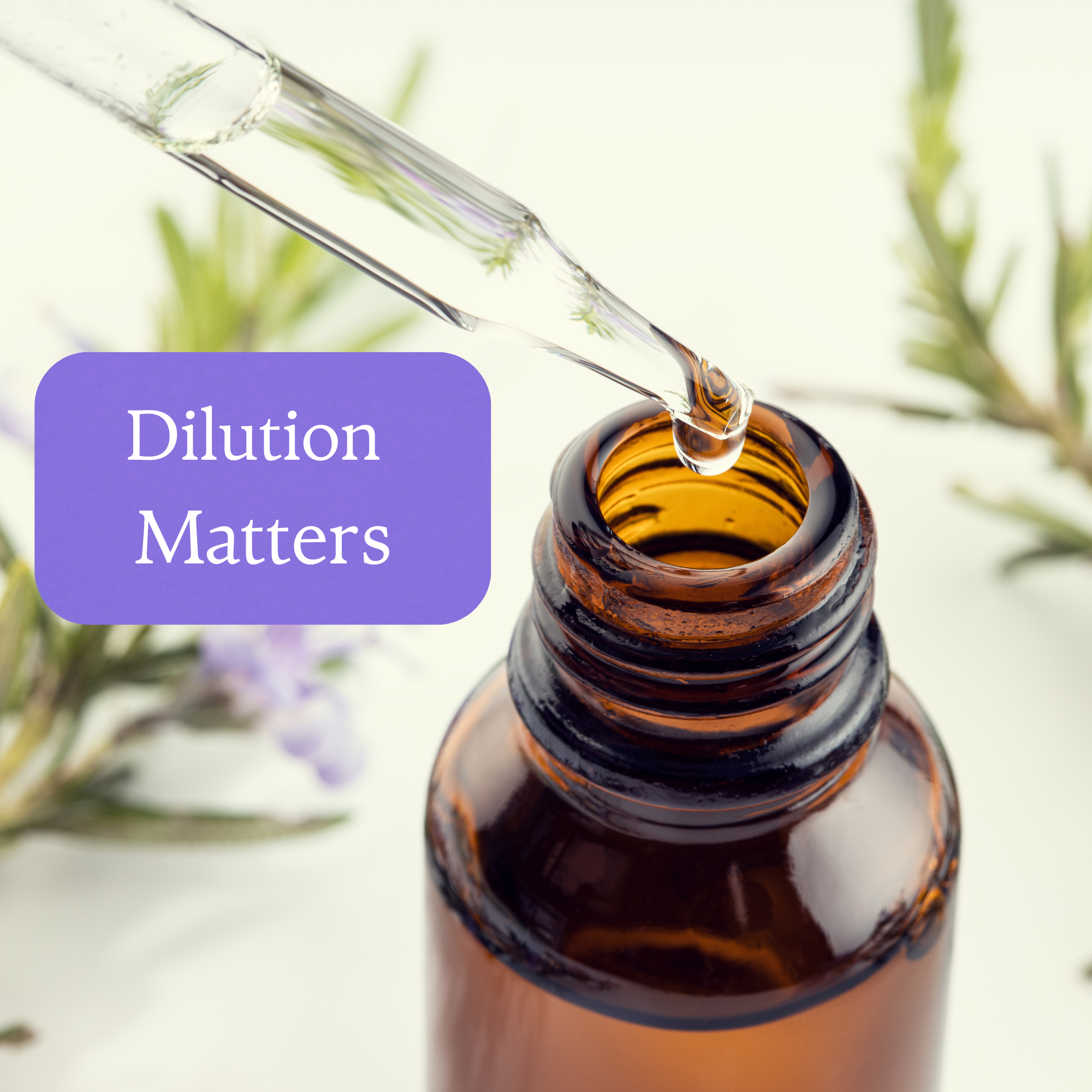
When you are exploring the world of essential oils, you have likely heard the term “dilution” mentioned often. It is not just a suggestion, it is the absolute foundation of safe and responsible aromatherapy.
Essential oils are incredibly potent, concentrated plant extracts. Because of this strength, they should almost never be applied “neat” (undiluted) directly to the skin. To use them safely and effectively, we incorporate them into a carrier oil, which is a neutral, fatty plant oil such as Jojoba, Hemp seed, or Fractionated Coconut oil.
Diluting your oils does three essential things:
- Safety: It prevents skin irritation, sensitization, or adverse reactions.
- Absorption: It helps the skin absorb the volatile components of the essential oil more effectively without them evaporating too quickly.
- Budget: It allows you to use your precious oils sparingly, making your investment last much longer.
In this guide, we will break down the safe dilution rates recommended by industry experts like NAHA (National Association for Holistic Aromatherapy) and Robert Tisserand.
Dilution Reference Chart (Based on 1 oz Carrier Oil)
This table provides a quick reference for safe blending. Because essential oils are measured in milliliters (ml) and carrier oils are typically purchased in ounces (oz), we use the industry standard conversion that 1 ml of essential oil equals approximately 20 drops.
This chart can be downloaded here.
| Target Demographic | Dilution % | Total Drops in 1 oz Carrier |
| Infants (0–6 months) | 0% | Avoid essential oils (Use Hydrosols) |
| Children (6 months – 6 years) | 0.5% – 1% | 3 – 6 drops |
| Children (6 – 15 years) | 1% – 1.5% | 6 – 9 drops |
| General Adult Use | 1% – 3% | 6 – 18 drops |
| Elderly / Sensitive Skin | 1% | 6 drops |
| Pregnancy / Nursing | 1% | 6 drops |
Understanding the Math
Keep in mind that there are 20 drops per 1 ml
Important Safety Protocols
- A Note on Infants: For those under six months, essential oils are generally too potent for their developing systems. I strongly recommend using hydrosols, which are gentle, water-based, and far safer for delicate newborn skin.
- Pregnancy and Nursing: Many essential oil constituents can cross the placental barrier. Always consult with a qualified healthcare provider before use. A 1% dilution is the maximum safe standard for general topical application.
- The Elderly: As skin thins with age, it becomes more susceptible to sensitization. Furthermore, many elderly individuals are on prescription medications that may interact with certain oils. Stick to a 1% dilution to ensure safety.
- Patch Testing: Regardless of age or health status, always perform a patch test by applying a small amount of your diluted blend to the inner forearm and waiting 24 hours to ensure no reaction occurs.
- Know Your Constituents: Some oils, such as Clove Bud or Oregano contain high levels of phenols. These are highly potent and require a maximum dilution of 0.5% regardless of the user.
Disclaimer: The information provided on this website is for educational purposes only and is not intended to diagnose, treat, cure, or prevent any disease. These statements have not been evaluated by the FDA. Essential oils are not a substitute for professional medical care. Please consult a physician regarding any medical conditions, and never disregard professional advice because of information read here.