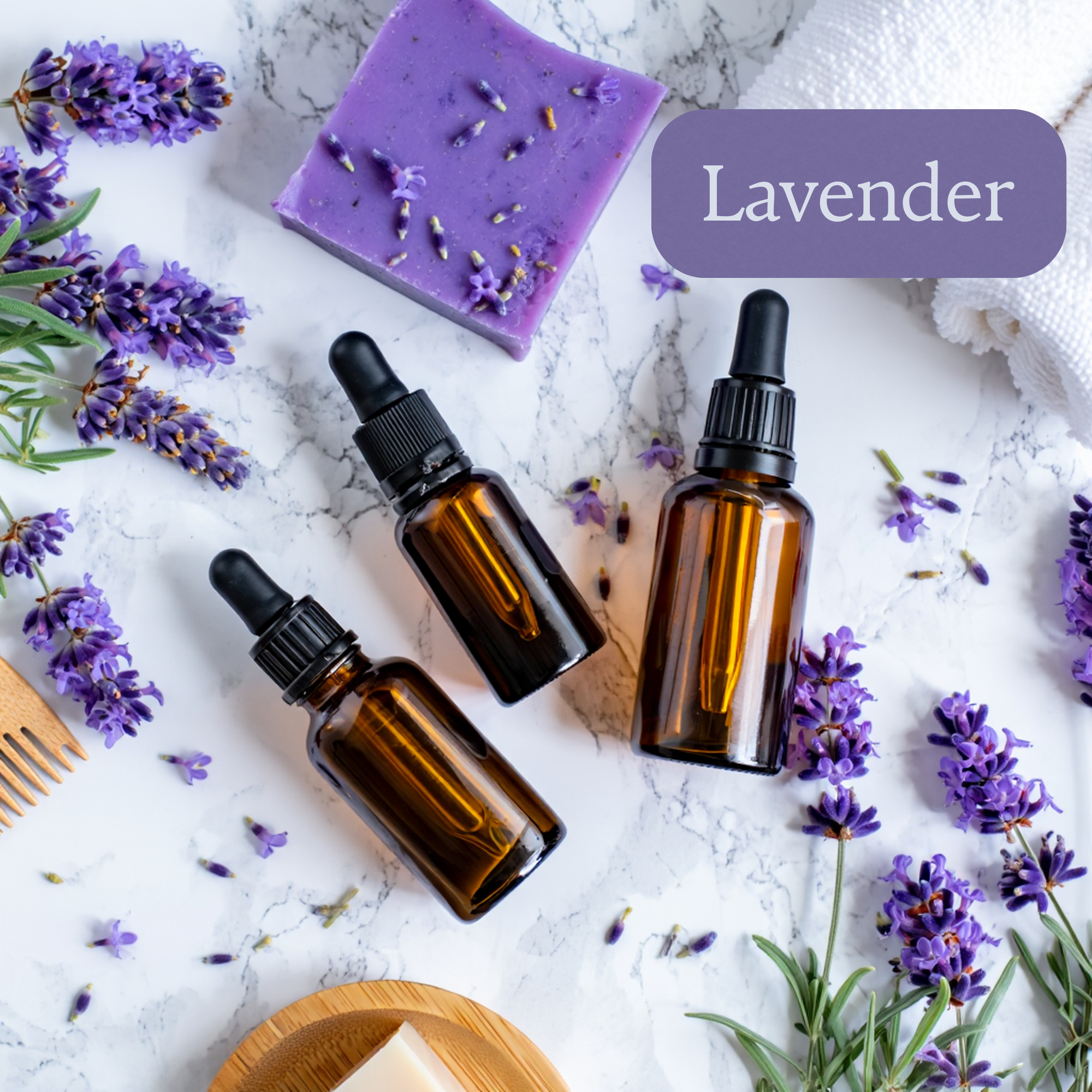
Lavender (Lavandula angustifolia)
Background
Lavender (Lavandula angustifolia) has been used for centuries, prized for its iconic, calming scent and its profound versatility. Originating from the Mediterranean, it has become the gold standard in aromatherapy for its ability to bridge the gap between physical relaxation and emotional equilibrium.
Purpose and Extraction
Lavender is primarily used to promote relaxation, soothe occasional skin irritations, and support a restful sleep cycle. This oil is obtained through steam distillation of the flowering tops, a process that ensures the volatile aromatic compounds remain potent and therapeutic.
Chemical Family and Empirical Action
Lavender is rich in monoterpene alcohols, primarily linalool, and esters, specifically linalyl acetate. These constituents work synergistically.
- Key Constituent: Linalool
- Mechanism of Action: Linalool has been shown to act on the parasympathetic nervous system. It modulates the excitability of neurons and interacts with GABA receptors, which helps inhibit the stress response and promote sedation.
- Empirical Basis: Research suggests that inhalation of linalool reduces blood pressure and heart rate, providing measurable evidence of its anxiolytic properties.
- Key Constituent: Linalyl Acetate
- Mechanism of Action: As an ester, linalyl acetate is highly valued for its antispasmodic and sedative effects. It aids in relaxing smooth muscle tissue and contributes to systemic relaxation.
- Empirical Basis: Studies indicate that the combined presence of linalool and linalyl acetate creates a potent sedative synergy that is more effective than either compound in isolation.
Blending and Usage
- Aromatic Profile: Lavender is a middle note. It blends well with citrus oils, including Bergamot (Citrus bergamia), and woody oils, such as Frankincense (Boswellia carterii), because the high ester content acts as a bridge, balancing sharp top notes and anchoring deeper base notes.
- Diffuser Blends: To create a grounding atmosphere, blend 3 drops of Lavender (Lavandula angustifolia) with 2 drops of Bergamot (Citrus bergamia) and 1 drop of Frankincense (Boswellia carterii).
- Topical Blends: For a calming body oil, use a 2% dilution rate (approximately 12 drops of essential oil per 1 oz of carrier oil) for general adult use.
Safety Concerns
Lavender is generally considered safe and non-toxic. It is not typically associated with skin sensitization; however, as with all essential oils, a patch test is recommended for those with hyper-sensitive skin. There are no major contraindications, but it is advised to use with caution if you have a history of severe skin allergies.
- Recommended Dilution Rate: To ensure safe topical application, always dilute this oil in a carrier oil. A 1–3% dilution rate (approximately 6–18 drops of essential oil per 1 oz of carrier oil) is recommended for general adult use. Always consult with a healthcare professional if you are pregnant, nursing, or under medical supervision.